EAIIoT 2027

Speakers

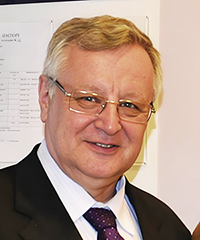
Andrey Koucheryavy

Andrey Koucheryavy

Professor, Saint‑Petersburg State University of Telecommunications, Russian Federation.

Research Interests: network planning, teletraffic theory, IoT and its enablers.

Dr. Andrey Koucheryavy graduated from Leningrad University of Telecommunication in 1974, and received his Ph.D and D.Sc in 1982 and 1994 respectively. Since 1998, he has been a Professor with The Bonch-Bruevich Saint-Petersburg State University of Telecommunications (SUT), where he became a Chair Professor with the Telecommunication Networks and Data Transmission Department, in 2011. Prior to that, he was an Advisor with the Central Science Research Telecommunication Institute (ZNIIS). He also serves as an honorary member of A.S.Popov society, and the Founder and the Scientific School Chair of the "Internet of Things and self-organizing networks" at SUT.

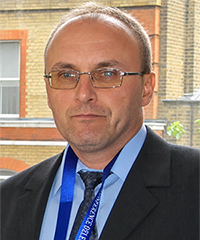
Dariusz Jakóbczak

Dariusz Jakóbczak

Senior Lecturer, Koszalin University of Technology, Poland.

Research Interests: artificial intelligence, numerical methods, probabilistic methods, operational research, game theory.

Dariusz Jacek Jakóbczak was born in Koszalin, Poland, on December 30, 1965. He graduated in mathematics (numerical methods and programming) from the University of Gdansk, Poland in 1990. He received the Ph.D. degree in 2007 in computer science from the Polish – Japanese Institute of Information Technology, Warsaw, Poland. From 1991 to 1994 he was a civilian programmer in the High Military School in Koszalin. He was a teacher of mathematics and computer science in the Private Economic School in Koszalin from 1995 to 1999. Since March 1998 he has worked in the Department of Electronics and Computer Science, Koszalin University of Technology, Poland and since October 2007 he has been an Assistant Professor in the Chair of Computer Science and Management in this department. His research interests connect mathematics with computer science and include computer vision, artificial intelligence, shape representation, curve interpolation, contour reconstruction and geometric modeling, numerical methods, probabilistic methods, game theory, operational research and discrete mathematics.

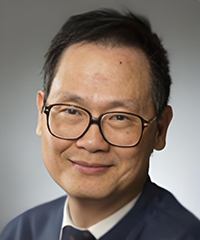
Duc Truong Pham

Duc Truong Pham

Professor, The University of Birmingham, UK.

Research Interests: mechanical, manufacturing, computer and systems engineering.

Professor Duc Truong Pham is the Chance Professor of Engineering at the University of Birmingham, UK. He is a Fellow of the Royal Academy of Engineering (FREng), and also a Fellow of several prestigious institutions, including the Institution of Engineering and Technology (IET), the Institution of Mechanical Engineers (IMechE), the Society of Manufacturing Engineers (SME), and the Learned Society of Wales (LSW). For his outstanding contributions to the field of engineering, he was awarded the Order of the British Empire (OBE) in 2003. Additionally, he serves as Emeritus Head of the School of Mechanical Engineering at the University of Birmingham.

Professor Pham has published more than 600 peer-reviewed papers in international academic journals and books, covering intelligent systems, advanced manufacturing and remanufacturing, robotics and autonomous systems. He is the originator of the renowned "Bees Algorithm," a swarm intelligence optimization technique inspired by the foraging behavior of honeybees, which has had a significant impact in both academia and industry. He has authored multiple academic monographs and serves as the founding editor of the Springer Series in Advanced Manufacturing, as well as the Editor-in-Chief of Cogent Engineering.

Professor Pham has led and participated in research projects with external funding exceeding £30 million and has supervised over 100 Ph.D. students to completion. He is an internationally renowned grant reviewer, regularly providing evaluation services for various international research funding bodies, including the UK Engineering and Physical Sciences Research Council (EPSRC), the Royal Society, the European Commission, the Natural Sciences and Engineering Research Council of Canada (NSERC), and the National Natural Science Foundation of China (NSFC). In recognition of his outstanding academic contributions in engineering and intelligent systems, he has received the Lifetime Achievement Award from the World Automation Congress and the Distinguished International Academic Contribution Award from the IEEE.

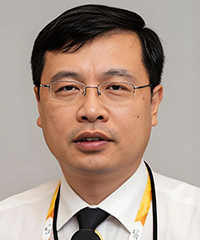
Robert Wu

Robert Wu

Senior Lecturer, University of Technology Sydney, Australia.

Research Interests: educational technology and computing, information systems, innovation management, systems engineering, information visualization.

Dr. Robert M.X. Wu is a Senior Lecturer in the School of Professional Practice and Leadership at the Faculty of Engineering and Information Technology, University of Technology Sydney. He is also an associate editor of the Electronic Journal of Business Research Methods (an Australian Business Deans Council (ABDC) journal). Dr. Wu holds a Ph.D in information systems/e-commerce, Master of e-commerce, Master's program in computer science, Bachelor of economics, and Diploma in computer science. Dr. Wu is a pioneering researcher in digital transformation, driving the transition from traditional to digital business, or e-business. As a senior reviewer and special issue editor, he serves 12 SCImago Q1 and ABDC A*/A journals. A Q1 Elsevier journal awarded him "Outstanding Contribution in Reviewing" twice in 2016 and 2018. Dr. Wu is also an internationally renowned consulting expert on leading interdisciplinary and industry-engaged research projects. He has demonstrated exceptional leadership, expertise, and innovation throughout his career, particularly in industry-engaged international collaborations. Over the past decade, he has successfully spearheaded more than ten large-scale international projects in partnership with Fortune Global 500 companies, prestigious universities, and various governments and industry stakeholders. His track record demonstrates his dedication to fostering meaningful connections in the global academic and business communities.

Vijayan K. Asari

Vijayan K. Asari

Professor, University of Dayton, USA.

Research Interests: Signal processing, Image processing, Computer vision, Pattern recognition, Machine learning, Artificial neural networks, High performance and low-power digital architectures.

Dr. Vijayan Asari is the University of Dayton Ohio Research Scholars Endowed Chair in Wide Area Surveillance and a Professor with the Department of Electrical and Computer Engineering at the University of Dayton, and Director of the Center of Excellence for Computational Intelligence and Machine Vision (Vision Lab).

He began teaching as an Assistant Professor in Electronics and Communications at the University of Kerala (TKM College of Engineering), India. In 1996, he joined the National University of Singapore as a Research Fellow, leading a team for the development of a vision-guided micro-robotic endoscopy system. In 1998, he joined the School of Computer Engineering at Nanyang Technological University (NTU), Singapore, leading computer vision and image processing research in the Center for High Performance Embedded Systems at NTU. In 2000, he joined Old Dominion University as an Associate Professor, tenured in 2006, promoted to Full Professor in 2007, and founded the Computational Intelligence and Machine Vision Laboratory there. He joined the University of Dayton in 2010.

He received the Vision Award for Excellence (2017), Sigma Xi George B. Noland Award (2016), and Outstanding Engineers and Scientists Award for Technical Leadership (2015). He was selected as a Fulbright Specialist in 2017, visiting the National University of Littoral, Argentina; visited Obuda University, Hungary, as an Erasmus+ Visiting Faculty in 2018; and visited NTU, Singapore, as a Visiting Professor in 2018. He was elected SPIE Fellow in 2018.

He has published over 700 research articles, including an edited book on wide area surveillance and more than 130 peer-reviewed journal papers, in image processing, computer vision, pattern recognition, machine learning, deep learning, artificial neural networks, and high-performance digital system architecture.


Xiangjie Kong

Xiangjie Kong

Professor, Zhejiang University of Technology, China.

Research Interests: urban computing, social computing, knowledge management.

Kong Xiangjie is a professor at the School of Computer Science and Technology, Zhejiang University of Technology, a recipient of the Zhejiang Provincial Outstanding Youth Fund, a Hangzhou Qianjiang Distinguished Expert, a Canal Young Scholar at Zhejiang University of Technology, and the founder and director of the Urban Science and Social Computing Laboratory. He is currently a Distinguished Member of the CCF, a Senior Member of IEEE, a Member of ACM, a Member of the American Society for Research in Science (Sigma Xi), an Executive Committee Member of the Information Systems Committee of the China Computer Federation, an Executive Committee Member of the Ubiquitous Computing Committee of the China Computer Federation, and a Member of the Federated Data and Federated Intelligence Committee of the Chinese Association of Automation. He has served as an editor for several international SCI journals, including PeerJ Computer Science, KSII Transactions on Internet and Information Systems, and Array, and as a (chief) guest editor for several international SCI journal special issues, such as Pervasive and Mobile Computing. He has been invited to serve as the plenary/program committee chair for more than 10 international conferences, including CCVPR, and has delivered plenary/keynote speeches at more than 10 international conferences, including IEEE CCCI. He serves on the Senior Program Committee (SPC/TPC) of several international conferences, including AAAI, IJCAI, KDD, IEEE Big Data, IJCNN, COMPLEX NETWORKS, IEEE UIC, and IEEE ICC. He has published/accepted over 300 papers in international journals and conferences and has consistently been ranked among the top 2% of scientists globally by Stanford University, both in terms of lifetime impact and annual scientific impact.

Muazzam Ali Khan Khattak

Muazzam Ali Khan Khattak

Professor, National Academy of Artificial Intelligence, USA.

Research Interests: Artificial Intelligence, Internet of Things, IoVs, IIoTs, Smart Cities, Information Security.

Prof. Dr. Muazzam Ali Khan Khattak (Senior Member of IEEE, AAAI & Member Pakistan Academy of Sciences). Prof. Khattak (Member NADRA Authority Board) listed among top 2% highly cited scientists of the world in 2024 and 2025. He is recipient of Gold Medals from Pakistan Academy of Sciences-COMSTECH and IEEE Islamabad Section. Currently he is working for National Academy of Artificial Intelligence, USA. He is also Chairperson of UNESCO National IFAP Committee. Earlier he served as Associate Dean Computing and Head Postgraduate Program at SEECS, NUST. He received his postdoc from University of Missouri (UMKC), USA, and PhD in a sandwich from IIUI and University of Missouri (UMKC), USA and joined them as an adjunct Professor. He has published 03 books and 16 book chapters with renowned international publishers. Beside that he has more than 240 articles in reputed international journals and conferences, based on which he among highly cited scientists of the world total with citations of 6950 and h-index of 45. He has secured national and international research grants of Rs. 1.7 billion by the Ministry of Education, Kazakhstan, British Council, University of Missouri, USA, USAK University, Turkiye, and Margullan University, Kazakhstan. He is also a member of the International advisory boards at Texas American Muslim Universities (TEXAM), USA, USAK University, Türkiye, Baku State University, Azerbaijan, Xidian University, China, Member Senate MUST University, AJK and senior member of Pakistan Academy of Sciences. He is a master trainer in IPFP and train in the trainers' program by NAHE, Higher Education Academy, HEC Pakistan.

Latest News

Announcements